The Ways In Which Drift Telemetry Tools Removes Guesswork within Suspension Setup
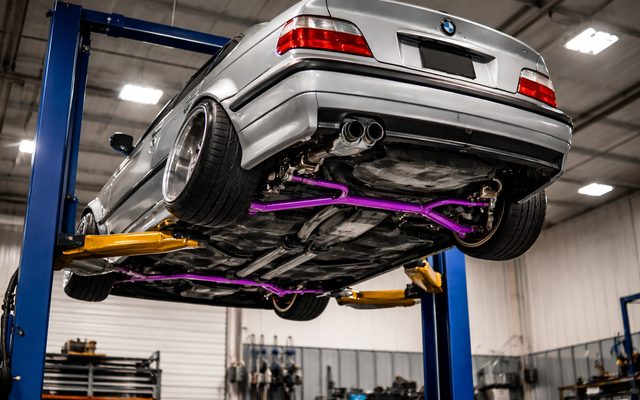
In the high-stakes arena of modern pro-level drifting, victory is far more than exclusively a result of raw engine power or behind-the-wheel bravado. Rather, it is now a complex discipline that necessitates a meticulous blend of selecting a inherently capable car, equipping it with the most precise drift-spec hardware, and, most critically, comprehending its live characteristics on the track through sophisticated suspension tuning applications. This exhaustive guide acts as your blueprint starting from the very first idea of a drift build right through to the last engineering-refined adjustments that transform a powerful car into a predictable podium finisher. We will examine in detail the methodical process of car suspension tuning, demonstrating how a state-of-the-art vehicle dynamics tool like precise measurement hardware eradicates approximation and offers exceptional clarity into your chassis's real-world dynamics.
The bedrock of any successful drift car is, without question, the chassis itself. Certain platforms have attained renowned standing within the international oversteer scene due to their natural weight distribution, strong construction, and the vast ecosystem of specialist components available. Choosing the correct car is the first and most crucial selection a driver will make. For instance, the BMW's E36 3 Series is universally acknowledged as one of the best all-around cars for drifting of all time. Its near-perfect evenly distributed mass, combined with a RWD configuration and bulletproof six-cylinder powerplants, creates a chassis that is at once accessible for beginners and incredibly competitive in the hands of a expert pilot. The evolution of this lineage, the BMW E46 platform, improves on these strengths with a increasingly refined frame, broader track for greater stability, and yet a greater degree of steering angle as standard from the factory. A distinct powerful option in the pro scene is the C6 generation Corvette.
This American track weapon brings a particular set of advantages to the sliding world, such as a lightweight aluminium structure, a transaxle-style drivetrain component that aids in an perfect weight distribution, and the tremendous torque of a big GM LS engine. This combination transforms it into an absolute monster on track, designed of initiating and holding continuous drifts with apparently minimal use of acceleration. For those looking for remarkable value, the 350Z model Nissan excels as a prime example. It comes from the manufacturer with a robust chassis, a effective original limited-slip differential, and the smooth VQ series motor that delivers ample horsepower and torque for mastering and moving up in the discipline. Its successor, the Nissan 370Z, brings further refinements in body strength, steering geometry, and outright motor power, establishing its place as a popular selection among competitive pilots. Further historic platforms that deserve mention encompass the nimble Wankel-engined FC generation RX-7, the ever-present Nissan S13, the American Ford SN95, the electronic-equipped BMW E90, and the compact yet unbelievably playful and forgiving MX-5 Miata. Each of these chassis offers a different palette of traits, challenges, and possibilities, but they all have in common the fundamental components required to become a serious drift machine.
However, choosing the correct chassis is just the beginning. To release the complete capability of any of these vehicles, significant modifications to the steering geometry and damping and springing systems are completely essential. This is where the world of performance aftermarket components becomes sharp view. The one most game-changing modification for a dedicated competition vehicle is the fitting of a drift-spec steering angle kit. These sophisticated assemblies, such as those developed by performance brands like SLR, are engineered to radically enhance the chassis's maximum lock-to-lock rotation. A standard production vehicle is highly limited in how far its steering tires can pivot, a design trade-off for daily use. In sliding, conversely, aggressive countersteering is continuously needed to catch and hold a drift. An angle kit replaces the OEM hubs, tie rods, and often suspension arms with pieces that allow the front tires to reach steering lock over 70 or even 80 degrees, versus a average OEM angle of around 40 to 50 degrees.
This vastly expanded lock gives the operator with significantly enhanced authority during a slide, enabling it to be considerably more straightforward to initiate a slide, sustain it through a extended turn, and switch seamlessly from one side to the opposite. The improvement in handling is truly profound. Paired with a properly selected angle kit is the every bit as vital enhancement to the chassis's spring and damper setup. Off-the-shelf or including expensive sport dampers are simply not designed for the particular and extreme needs of sliding. A purpose-built set of adjustable dampers is of utmost importance. These specialized coilovers have custom valving and spring stiffness that are designed for the violent weight transfer that is characteristic of sliding. When a operator starts a slide, the vehicle's mass is thrown violently to the front of the turn. Proper drift-spec suspension control this movement in a predictable fashion, enabling the chassis to settle rapidly and giving the operator precise feedback through the controls and driver's seat. They also provide exact adjustment of stance, rebound and compression stiffness, and weight balance, which are all key parts of optimizing the chassis's behavior to a specific venue or driving approach. In combination, a high-quality angle modification system and a correctly specified system of drift-spec suspension units form the core physical cornerstone upon which all later refinement is constructed.
Once the essential hardware is fitted, the next vital phase in the development is the meticulous setting of the vehicle's wheel angles. This is the realm of car suspension tuning, a procedure that can feel daunting to the beginner but is, in reality, the secret to transforming a assembly of fast components into a harmonious and consistent whole. The most critical aspect of suspension geometry for drifting is certainly negative camber. Camber is the tilt of the rim relative to the upright axis when viewed from the front-on of the chassis. When the upper part of the tire is tilted towards the car, this is referred to as inward tilt. For sliding, inward-leaning wheels on the front wheels is generally applied and is seen as essential. The logic is deeply linked to physics.
When a car is turning at limit sideways angles, the body rolls towards the outer of the corner. This lean forces the outer front tire to lose its optimal footprint with the track surface. By adding inward lean, the wheel is pre-leaned to account for this roll. As the car leans into the corner, the tire becomes more upright on the track, increasing its traction at the exact time when it is most required for directional command. Commonly, front axle angles for a serious drift machine vary from approximately -3 degrees to as extreme as -5 degrees or even greater, based on the specifics of the car setup, tire choice, and driver feel. The rear tires also employ inward lean, but the values are usually more modest and subtler than the front. Excessive negative camber at the back can make the car overly prone to oversteer and hard to predict on throttle use, as it diminishes the effective contact patch of the driven tires during forward acceleration. Therefore, rear axle angles are often in the range of -1 degree to -3 degrees, achieving a precise compromise between offering enough lateral bite to help in entering and sustaining the slide while still keeping good traction for exiting the bend. camber angle is just one component of the broader alignment puzzle, which additionally encompasses toe, self-centering steering, and suspension-induced steering adjustment.
Toe describes the angle of the tires as seen from a bird's-eye view. Positive toe means the front edges of the tires are closer together than the trailing edges, while toe-out means the reverse. For drifting, a slight amount of front toe-out is commonly employed to sharpen the turn-in steering feel, making the car feel more responsive and willing to begin a drift. Rear toe angle is typically set to neutral or a very minute amount of inward toe to promote stability under throttle. Caster is the forward or rearward inclination of the kingpin axis when looked at from the side-on of the car. Positive caster angle improves steering feel and high-velocity stability, and it furthermore adds to camber effect during turning, which is highly useful. Setting these values is a intricate interaction where a change to one setting can and often will influence the others. The conventional method for tuning a vehicle's suspension geometry for sliding has drift telemetry software historically been a tedious affair of experimentation and feeling. A driver or crew would introduce a change based on experience, drive the vehicle on track, use the operator's personal feel and comments, and then introduce an additional change. This process would iterate over and over until the vehicle felt "right" or the allotted practice time ran out. This approach is not just exceptionally wasteful in terms of man-hours and tires, fuel, and parts, but it is also deeply imprecise.
Driver sensation is a famously unreliable measurement tool, affected by numerous elements such as fatigue, evolving track conditions, temperature, and just the mindset of the operator on that particular day. What feels "tail-happy" on one run might feel "pushing" on the next run, causing confusing data and frustrating changes. This age-old challenge in chassis setup is exactly where state-of-the-art technology has intervened to completely change the landscape.
The rise and application of sophisticated drift telemetry software has ushered in a completely new age for engineering and refining professional drift cars. These tools, represented by groundbreaking products like modern telemetry hardware, function by physically measuring the real-time mechanical behavior of the vehicle as it is operated on the course. Unlike relying on driver impression, these tools collect quantifiable metrics on essential factors such as suspension travel, corner velocities, lateral and longitudinal g-forces, lock position, and throttle and brake application. This acquired data stream is then processed by sophisticated applications that can plot and analyze the metrics in a comprehensible manner. For the first time ever, tuners and builders can observe precisely what the chassis is exhibiting at every point of a drift. This function transforms the complete chassis setup process. Think about the specific task of setting the front negative camber for a particular vehicle. Instead of applying a change from -3 degrees to -3.5 degrees and then testing multiple runs to try and "perceive" a difference, a telemetry system can deliver immediate and clear information. The software can display in a chart how the tire's grip is acting during the critical stages of a angle: the initial flick, mid-corner, and switch. It can show if the present camber setting is enabling the loaded tire to maintain optimal grip or if the compound is overloaded on its outer drift angle kits edge.
The tool can after analysis suggest data-driven suggestions for change. Perhaps the information reveals that the tire is still stressing its edge at -3.5 degrees of negative camber, implying that even more negative camber, say -4 degrees, might be beneficial. On the other hand, the information might indicate that the tread is failing to achieving heat or that the inside shoulder is wearing excessively, which could suggest that there is excessive inward lean and a small decrease back to -3.2 degrees would be better ideal. This degree of accuracy and useful intelligence was completely impossible in the time of exclusively seat-of-the-pants setup.
The effect of using a advanced drift telemetry system goes well beyond just dialing in camber angles. It serves as an invaluable coilover setup tips that is tailored to your exact car. When setting the shock absorber clickers on your adjustable dampers, instead of relying on vague guidelines or replicating another car's numbers, you can employ the telemetry to see how the vehicle is performing in reaction to your changes. The tool can show the suspension travel data over a run, showing if the dampers are controlling the chassis motion effectively or if they are allowing the car to become unsettled uncontrollably after a direction change. It can assist in diagnosing challenges like excessive compression or losing droop, enabling you to introduce data-backed choices to spring preload, rebound/compression settings, or ride height. This approach translates equally to the detailed process of car alignment tuning. Beyond camber angle, the tool can provide analysis into how changes to toe and caster angle are impacting the vehicle's handling during different parts of a slide. For instance, it car alignment tuning can assist you to find the ideal amount of front axle toe out for your specific steering rack setup and piloting style by analyzing the speed of turn-in reaction and the consistency of the vehicle at maximum countersteer. This makes the software an incredibly effective drift suspension tuning guide that is constantly updated by the real-world dynamics of your personal chassis on the track. It shifts the complete endeavor from a subjective skill into a repeatable optimization procedure.
Furthermore, the value of a tool like modern telemetry is in no way confined to experienced engineers with vast resources. For the club-level enthusiast, it functions as an powerful force multiplier. It practically offers the builder with the insight of a full-time suspension specialist without the corresponding overhead. It accelerates the development time by delivering clear solutions to challenges that would otherwise take years of experimentation to understand. A driver can understand how their individual chassis responds to various adjustments, developing a more intuitive knowledge of vehicle dynamics in the process. It additionally makes accessible advanced performance tuning techniques, permitting anyone with the desire to perfect their machine to accomplish it in a systematic and productive way. This is especially valuable in a discipline like sliding, where tuning know-how has traditionally been a tightly held asset among elite teams. Now, that knowledge can be in the hands of any motivated builder.
In the final analysis, the process to engineering and dialing in the perfect championship-contending drift machine is a multi-stage endeavor that smoothly combines time-honored hardware principles with cutting-edge telemetry solutions. It starts with the wise selection of a proven car, then enhanced by the integration of critical performance parts like drift-spec drift angle kits and properly selected competition adjustable dampers. The process then moves into the intricate realm of car suspension tuning, where values like camber angle, toe, and caster angle are carefully adjusted to complement the car's new hardware and the pilot's specific technique. Finally, and what really distinguishes the modern process from the old ways, is the use of a advanced drift telemetry software. This platform removes the guesswork and waste of purely feel-based tuning by giving objective, actual data on how the chassis is actually functioning. It acts as an indispensable suspension tuning tool, a actionable coilover setup manual, and a all-in-one performance analyzer. Together, this complete approach ensures that each and every component of the drift machine—from the pick of the chassis to the most minute click on the coilover—is optimized for peak success on the track. It signifies the total evolution of the discipline of oversteer driving, bridging physical pilot talent with precise chassis dynamics to forge the most competitive cars attainable.